Ketchikan has a cool, very wet maritime climate — it sits in the middle of the world’s largest temperate rainforest. The visitor season runs from May to September, when the cruise ships call and nearly all tours operate. For most people June and July offer the longest days and the best odds of dry spells, while August and early September are the months for salmon in the creeks and bears on the banks.
Month by month
| Month | Weather | Highlights | Watch out for |
|---|---|---|---|
| May | Cool, around 50–57 °F (10–14 °C); often one of the drier months | Season opens; fewer crowds; king salmon fishing begins | Snow still on high trails; few fish in the creeks yet |
| June | Mild, around 55–62 °F (13–17 °C); longest days, about 17 h of light | Best month for flightseeing odds; king salmon peak | Busy ship days; bears not yet reliable |
| July | Warmest, around 58–65 °F (14–18 °C) | Pink and chum salmon arrive; Fourth of July celebrations | Peak crowds and prices |
| August | Mild but rain increases | Creeks full of salmon; best bear viewing; silver salmon; Blueberry Arts Festival | More frequent wet days |
| September | Cooler, around 50–58 °F (10–14 °C); wetter and windier | Bears and silver salmon early in the month; quieter town | Tours wind down; storms begin |
| Oct–Apr | Cool and very wet; winter around 30–40 °F (−1 to 5 °C) | A quiet, authentic working town | Most tours and many shops closed |
How much does it really rain?
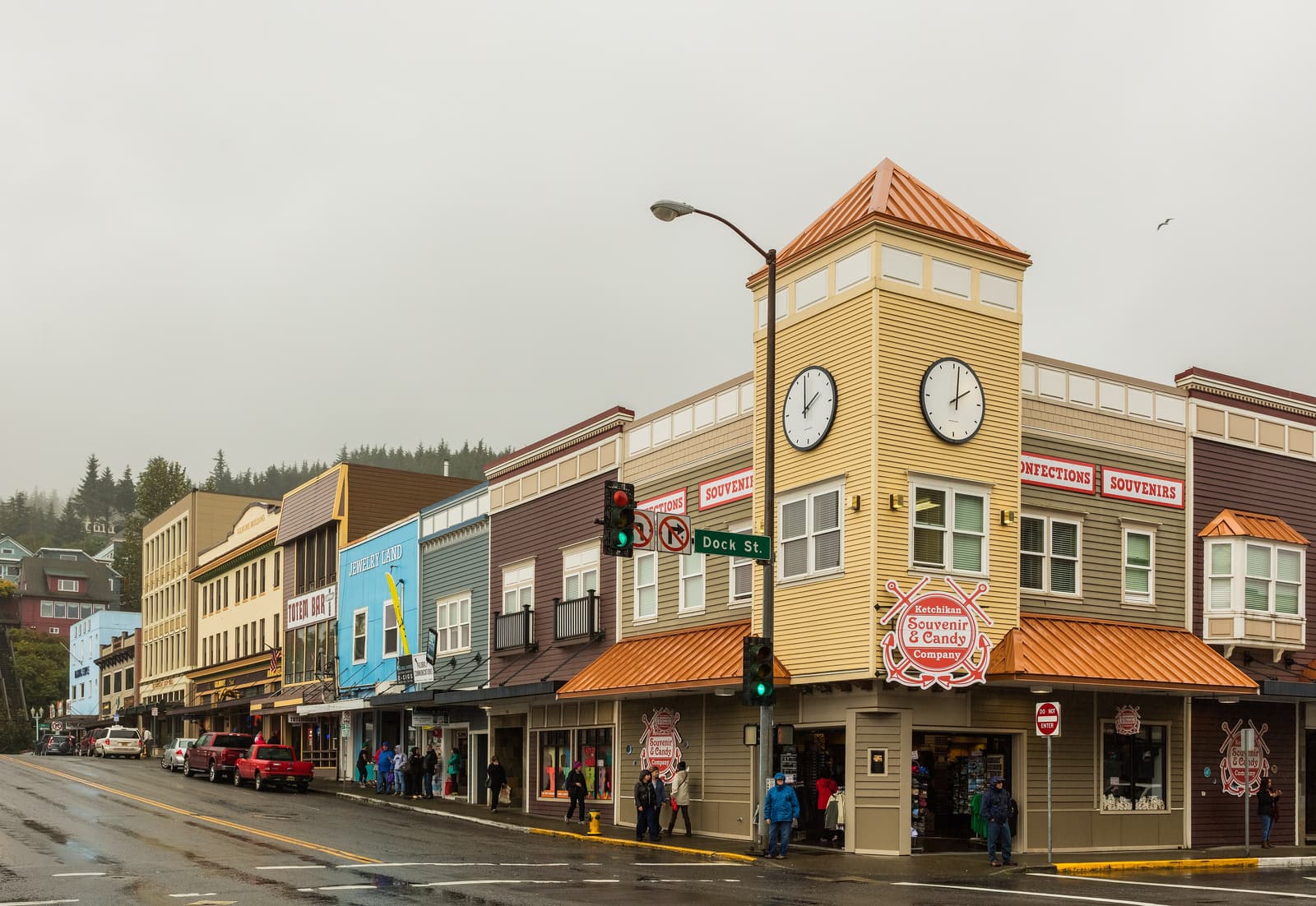
A lot. Ketchikan averages roughly 150 inches (about 3,800 mm) of precipitation a year, spread over more than 220 days, and a giant “Liquid Sunshine Gauge” downtown keeps score. The wettest months are in autumn — October alone can bring 20 inches or more — while late spring and early summer are relatively dry by local standards, which still means rain on many days. Temperatures are mild rather than cold, snow at sea level is usually short-lived, and heavy thunderstorms are rare: the typical Ketchikan day is grey, damp and drizzly, with brighter spells.
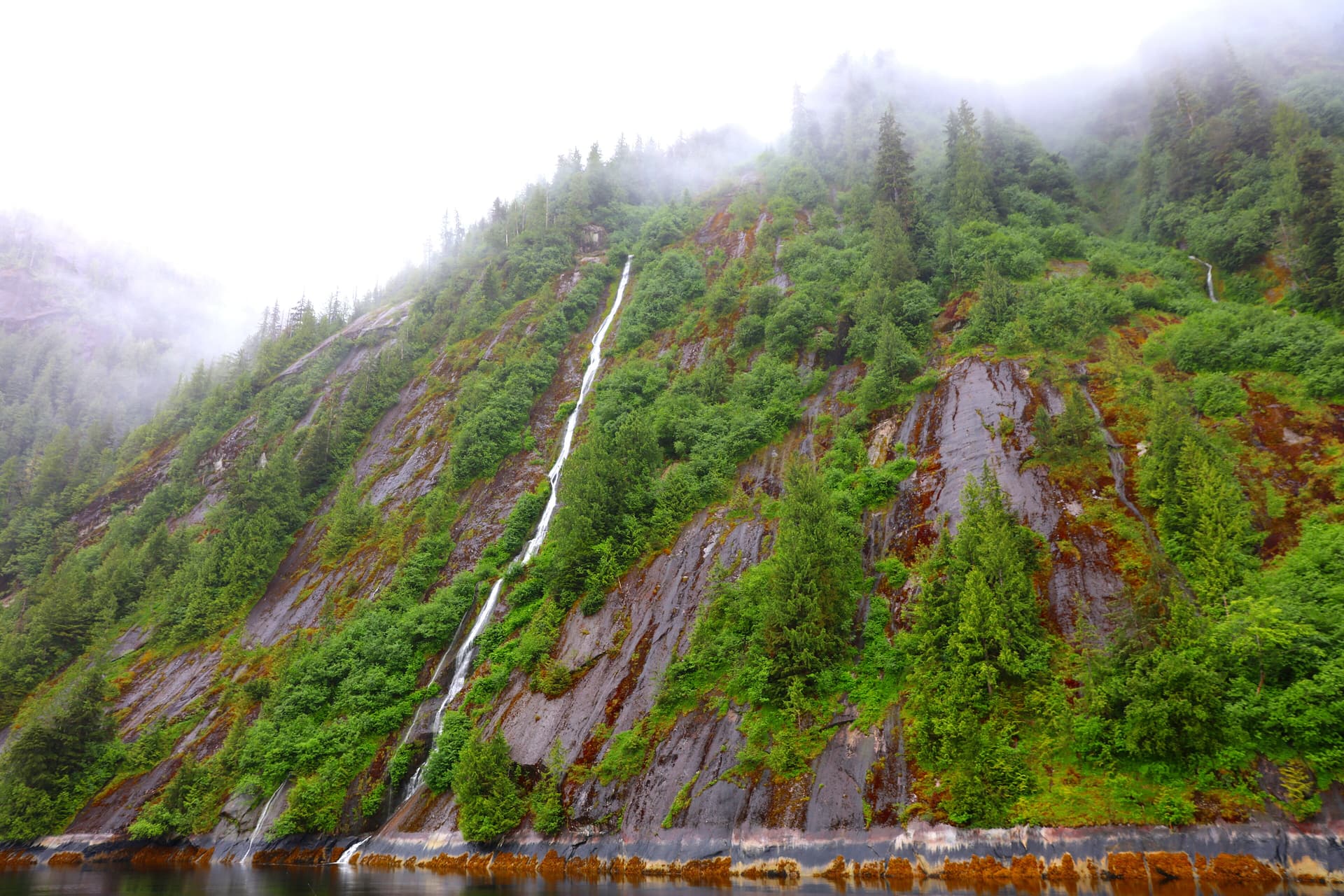
The upside is the reason you are here: the rain feeds the Tongass rainforest, the waterfalls of Misty Fjords and the salmon streams. Mist hanging in the trees is the look of the place.
What to wear
- Outer layer: a genuinely waterproof, breathable jacket with a hood. If you are booking a boat, kayak, zipline or ATV tour, waterproof trousers are worth bringing too, though many operators lend rain gear.
- Mid layer: a fleece or light insulated jacket. It is rarely warmer than the mid-60s °F (about 18 °C), and it is colder on the water and in the air.
- Base: quick-drying fabrics rather than cotton or denim, which stay wet and cold.
- Feet: waterproof walking shoes or light boots with grip — boardwalks and stairs are slippery. Locals wear brown rubber boots nicknamed “Ketchikan sneakers”.
- Extras: a hat that stays on in wind, thin gloves for boat trips in May and September, and a dry bag for electronics.
Salmon run months
All five Pacific salmon species return to the waters around Ketchikan, at slightly different times that shift a little each year:
- King (chinook): roughly May to July, peaking in June — the prize for anglers.
- Sockeye (red): mainly June and July.
- Pink (humpy): July and August, in huge numbers — these are the fish that fill Ketchikan Creek.
- Chum (dog): July to September.
- Silver (coho): August and September, sometimes into October.
To watch salmon from the Creek Street boardwalk or climbing the salmon ladder, come from about mid-July to mid-September. Halibut can be caught throughout the season.
Wildlife calendar
- Bears: most reliable from late July to mid-September, when salmon are in the streams. See bear viewing.
- Bald eagles: all year, especially around the harbours and salmon streams.
- Whales: humpbacks and orcas are seen in the surrounding waters through the summer, though Ketchikan is less of a whale-watching centre than Juneau or Icy Strait.
- Seals and sea lions: common on boat trips throughout the season.
Events
The Fourth of July is Ketchikan’s biggest celebration, with a parade, a logging competition and fireworks over the Narrows. The Blueberry Arts Festival in early August is a cheerfully local weekend of art, food and slug races. A long-running king salmon derby has traditionally been held in late spring and early summer, depending on fishing regulations. Check dates locally each year.
Visiting out of season
From October to April Ketchikan belongs to its residents. Flights, ferries, hotels and museums operate, prices drop and you will have Creek Street to yourself — but most excursions stop, days are short and it rains a great deal. It suits travellers who want to see a real Southeast Alaskan town rather than tick off tours.