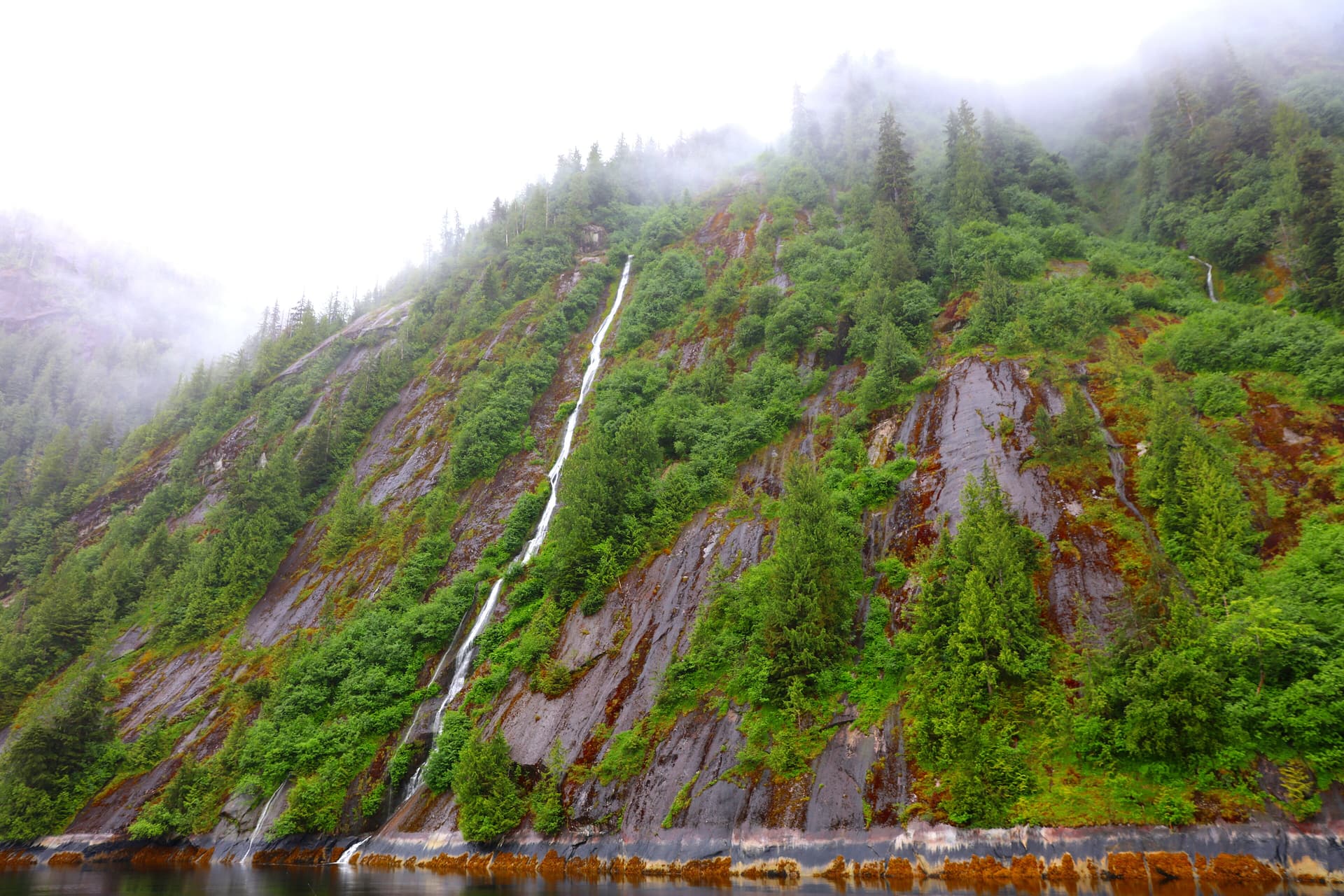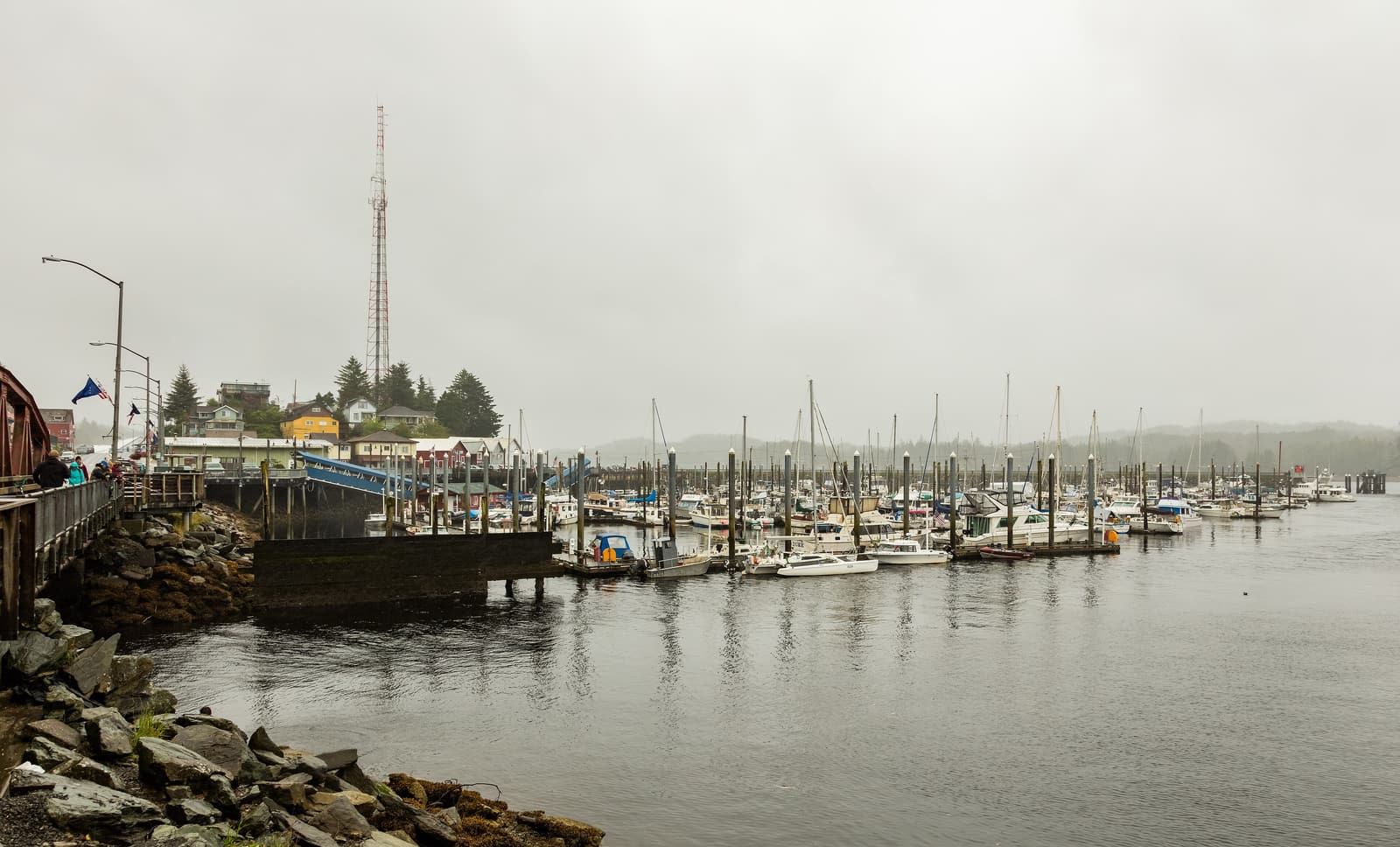
Ketchikan takes its name from Ketchikan Creek — in Tlingit, Kichx̱áan — where Tlingit people had a summer fish camp long before the first cannery opened in the 1880s. Salmon built the town, a gold and copper rush on nearby Prince of Wales Island filled its saloons, and for much of the 20th century a pulp mill at Ward Cove kept it working. Since the mill closed in 1997, visitors have become the main business from May to September, alongside a fishing fleet that still lands serious quantities of salmon.
The land here is the homeland of the Tlingit, and Haida and Tsimshian people have lived in the area for generations too. Their art — above all the totem poles — is the reason many travellers come.
Top sights at a glance
 Downtown, on foot from the ship
 Creek Street & Dolly’s House
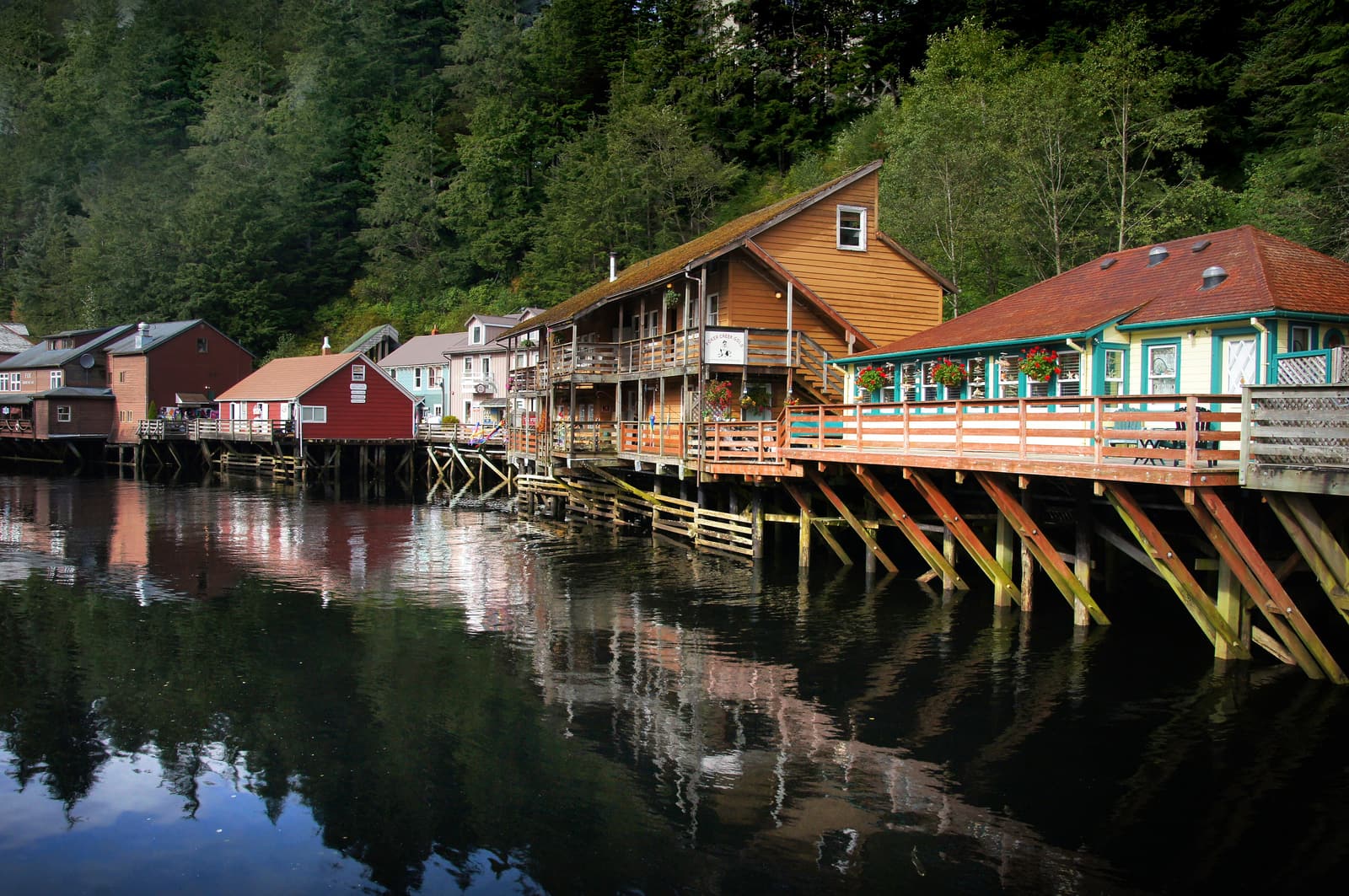
Ketchikan’s famous boardwalk on stilts — once the red-light district, now its prettiest street.
A wooden boardwalk built on pilings over Ketchikan Creek, lined with brightly painted houses that were brothels until 1954. Today it holds galleries, shops and the Dolly’s House museum, with salmon and sometimes seals in the water below.
 Wilderness & wildlife
 Misty Fjords National Monument
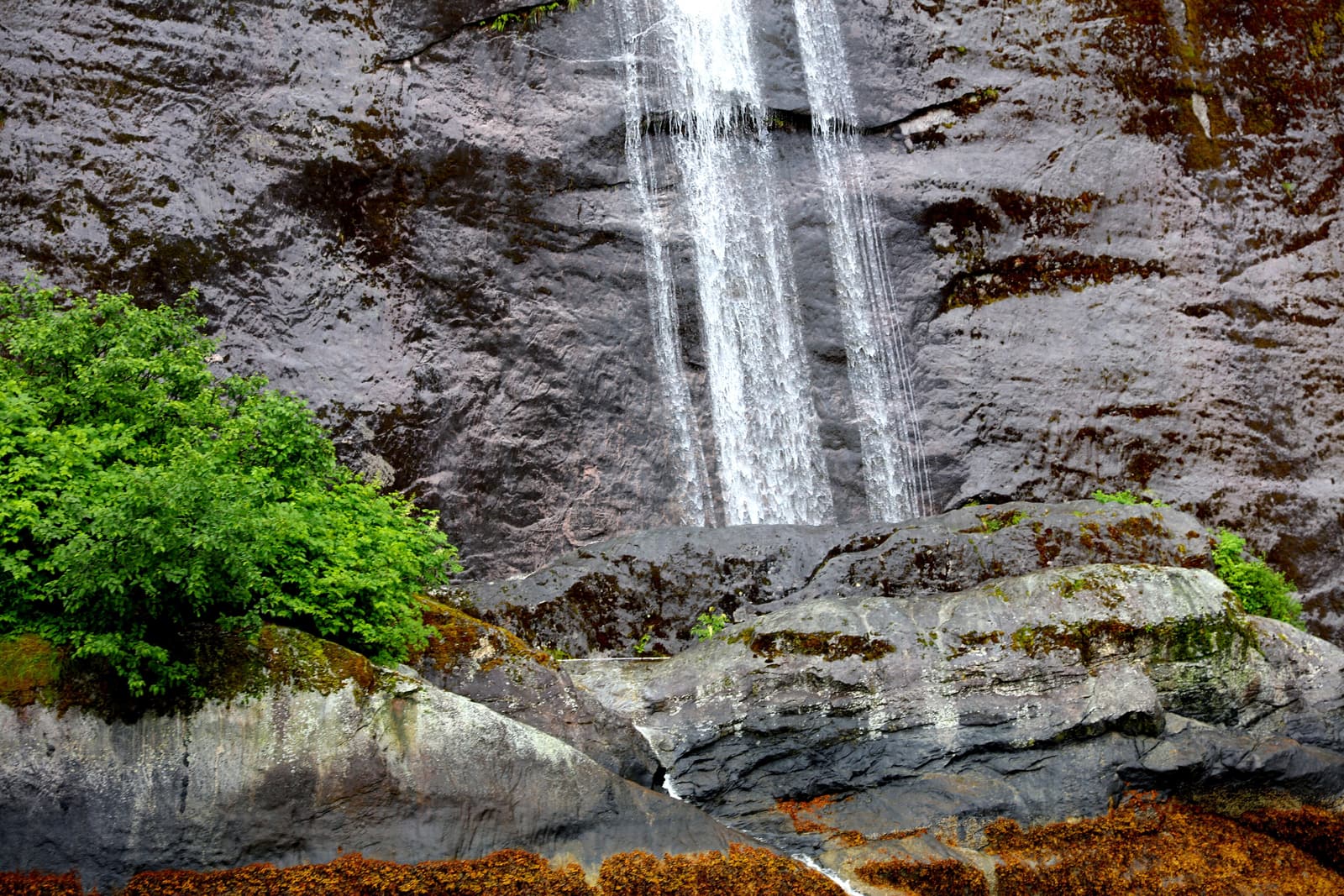
Sheer granite walls, waterfalls and silent lakes — by floatplane or boat from Ketchikan.
A 2.3-million-acre wilderness of glacier-carved fjords east of Ketchikan, with cliffs rising some 3,000 feet from the sea. There are no roads: you visit on a floatplane flight of about two hours or a boat cruise of four to five.
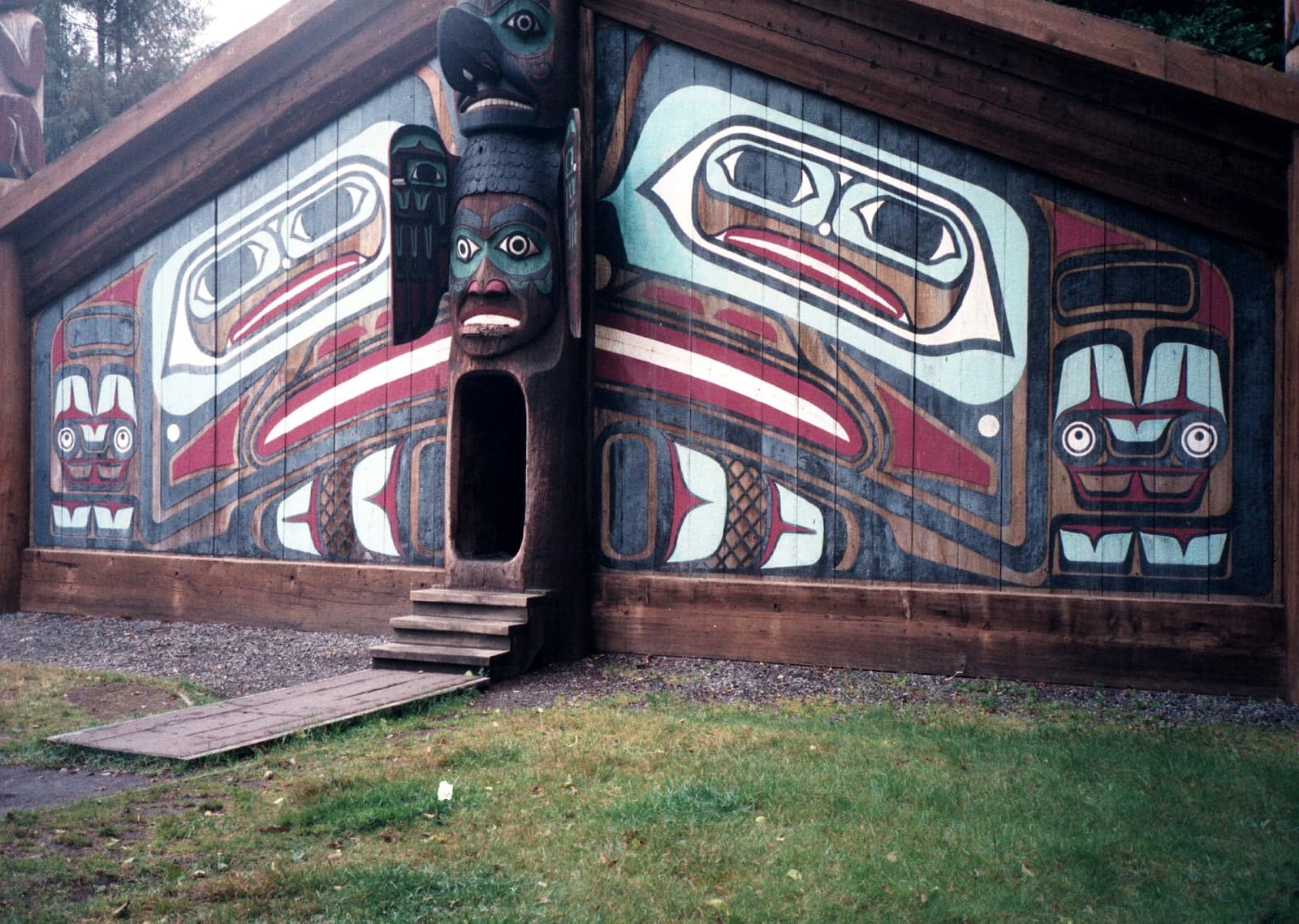 Totem poles & Native culture
 Totem Bight State Historical Park
Fourteen totem poles and a clan house in the forest by the sea, 10 miles north of town.
A state park on the shore of the Tongass Narrows where Tlingit and Haida carvers recreated poles and a traditional clan house from 1938 onwards. A short forest trail leads to one of the most photogenic totem sites in Alaska.
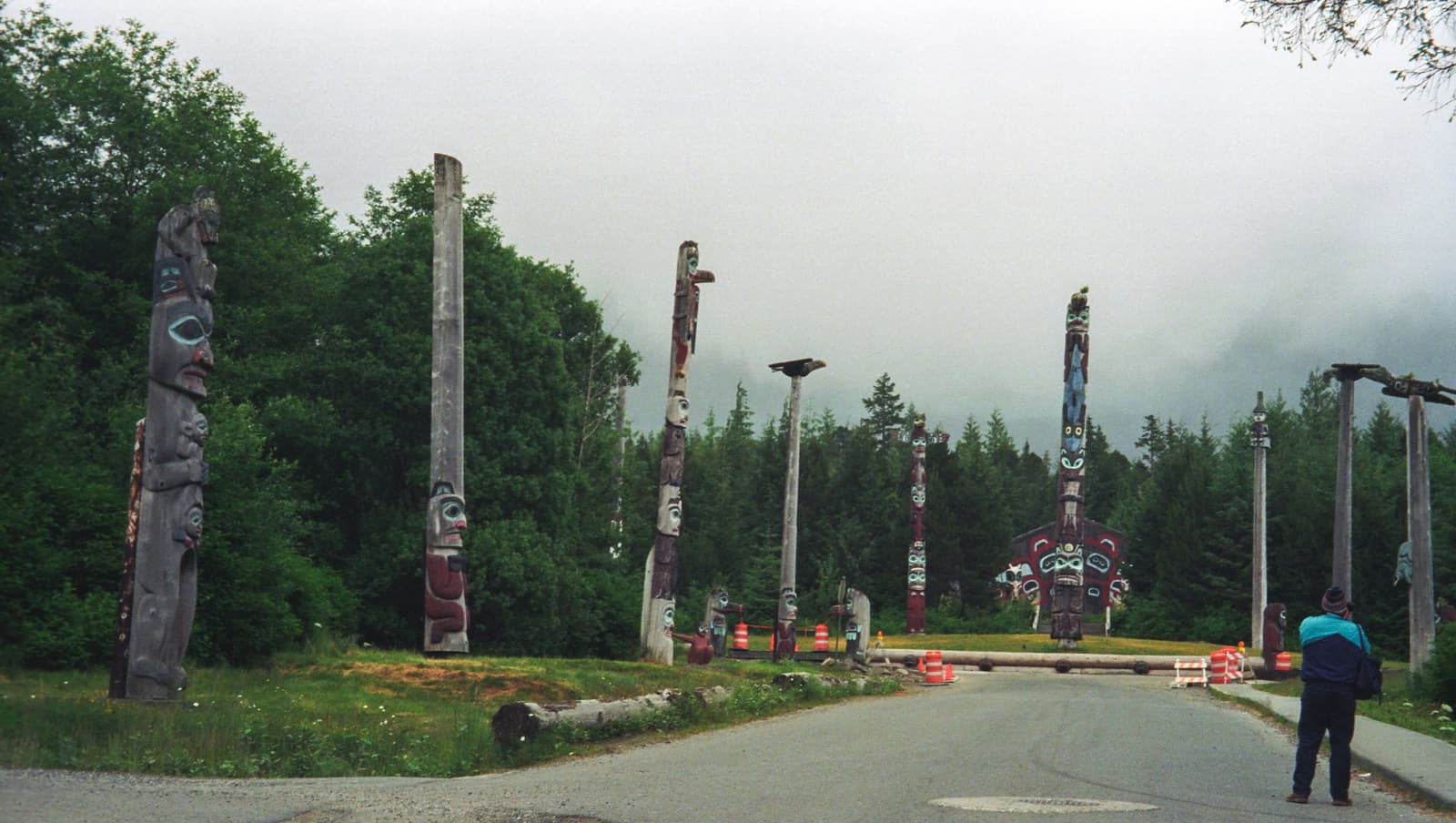 Totem poles & Native culture
 Saxman Native Village & Totem Park
A living Tlingit community with one of the world’s largest collections of totem poles.
Two and a half miles south of downtown, Saxman’s totem park holds around two dozen poles, a clan house and a carving shed where master carvers work. Guided visits include traditional dance; you can also walk the park on your own for a small fee.
Port-day plans
About four hours
- Walk to Creek Street, visit Dolly’s House and follow the creek up to the salmon ladder (60–90 minutes).
- Then choose one: the lumberjack show (about an hour), the Discovery Center, or a walk on to the Totem Heritage Center.
About six hours
- Book one main excursion of two to three hours: a Misty Fjords floatplane, a guided visit to Totem Bight or Saxman, or the crab-boat tour.
- Spend the rest of the time on Creek Street and the waterfront, with a bowl of chowder or fish and chips.
Eight hours or more
- Take a longer trip — bear viewing in season, kayaking, or a Misty Fjords boat cruise — and still have time for the downtown walk.
- Or combine a totem park in the morning with the lumberjack show and Creek Street in the afternoon.
Docking at Ward Cove? Subtract about an hour and a half from each plan for the shuttle. See getting here.
Itineraries for independent travellers
Two days
- Day 1: downtown on foot — Creek Street, the salmon ladder, the Totem Heritage Center, the Tongass Historical Museum and the Discovery Center. Evening walk around Thomas Basin when the ships have gone.
- Day 2: morning floatplane to Misty Fjords; afternoon bus, taxi or tour to Totem Bight and Potlatch Park.
Three days or more
- Day 3: south to Saxman and Herring Cove, or a bear-viewing trip in season. With a car, add Ward Lake and Settlers Cove.
- More time: hike Deer Mountain on a clear day, book a salmon or halibut fishing charter, or take the ferry to Prince of Wales Island or Metlakatla.
Fishing
Sport fishing is one of the main reasons independent travellers come. Half-day charters for salmon run straight from the downtown harbours and suit cruise schedules; halibut trips go further out and usually need a longer day. You need an Alaska sport-fishing licence (sold by the day, usually arranged through the charter or online), plus a king-salmon stamp if you target kings. Local processors will fillet, vacuum-pack, freeze and ship your catch home. See salmon run months.
Food and drink
Eat seafood. Look for wild salmon (grilled, smoked or in chowder), halibut and chips, Dungeness and king crab, spot prawns and rockfish tacos. Smokehouses downtown sell vacuum-packed and canned smoked salmon that travels well. Portions are generous and prices are higher than in the Lower 48 — nearly everything except the fish arrives by barge. Local bars pour Alaskan-brewed beer, and reindeer sausage turns up on breakfast menus.
Money and costs
- The currency is the US dollar. Cards are accepted almost everywhere; carry some small bills for buses and tips.
- Alaska has no state sales tax, but the city and borough charge a local sales tax of several percent, added at the till.
- Tipping follows US custom: around 18–20% in restaurants, and a tip for tour guides, drivers and boat crews is customary if you enjoyed the trip.
- Ketchikan is not cheap in summer. Excursions are the main cost; downtown sightseeing is nearly free.
Shopping without regrets
The streets nearest the docks are lined with jewellery and souvenir chains that follow the cruise ships. For something genuinely local, look for galleries and shops showing work by named Alaskan artists, and for Native art look for the Silver Hand emblem, which identifies authentic work by Alaska Native artists. Smoked salmon, local art prints and carved pieces from the totem parks’ own shops are good buys.
Safety and health
- Ketchikan is a safe small town. The practical risks are slippery boardwalks and stairs in the rain, and traffic on Tongass Avenue, which has narrow pavements.
- Bears: black bears live around town and come to salmon streams. Keep at least 100 yards away, never feed them, and on trails make noise and hike in company.
- On the water and trails: the sea is cold all year and weather changes fast. Go with guides unless you are experienced, and tell someone your plan before hiking.
- In an emergency call 911. Ketchikan has a hospital, PeaceHealth Ketchikan Medical Center, and pharmacies in town.
What to pack
- A properly waterproof jacket with a hood — not just “water-resistant”.
- Layers: a fleece or light insulated jacket under the shell, even in July.
- Shoes with grip that can get wet; waterproof if you have them.
- A dry bag or zip bags for phone and camera, and a spare pair of socks.
- Binoculars for eagles, whales and bears.
Umbrellas are of limited use in wind and on crowded boardwalks; locals mostly go without. More in what to wear.
Local etiquette
Totem poles are not “idols” and were never worshipped: they record family histories, honour the dead and tell stories that belong to particular clans. Treat them as you would memorials — do not climb on or lean against them — and ask before photographing dancers, carvers or regalia. And remember that this is a working town: fishing boats, floatplanes and school runs carry on around the visitors, so keep pavements and docks clear.